Table of Contents
Which Bathroom Tiles Are Best for Indian Homes?
Selecting which bathroom tiles are best for Indian homes requires finding the right balance between slip resistance, stain durability, moisture protection, and aesthetic design. Indian bathrooms endure heavy daily water exposure, soap scum buildup, and regional hard-water scaling, making tile choice a critical factor in both household safety and long-term maintenance.
For most Indian households, anti-skid matte vitrified tiles are the best choice for bathroom floors, while glazed ceramic tiles or large-format vitrified slabs work best for shower walls. Paired with non-porous epoxy grouting, this combination keeps wet zones safe, easy to clean, and resilient against hard-water staining.
What Are the Best Tile Types for Indian Bathrooms?
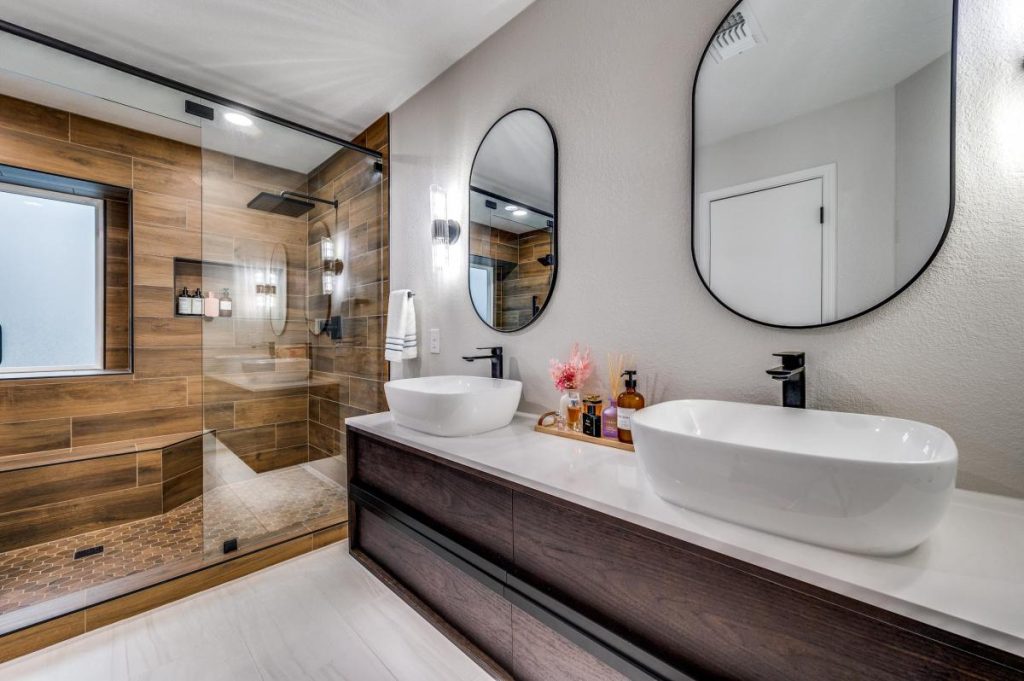
For Indian residential conditions, anti-skid vitrified tiles are ideal for flooring due to their ultra-low water absorption rate (below 0.5%) and textured surface grip. For wall cladding, glazed ceramic or vitrified tiles provide an impermeable barrier that resists moisture and wipes clean easily.
Why Local Living Conditions Impact Tile Performance
When evaluating tile options in Hyderabad communities across Gachibowli, Kondapur, Madhapur, Kukatpally, or Secunderabad, local environmental realities heavily influence material longevity:
- Hard-Water Mineral Scaling: High mineral content in municipal and borewell water forms stubborn white calcium deposits on dark or high-gloss tiles. Lighter, matte or satin-finish tiles hide scaling significantly better.
- Monsoon Seepage Exposure: Heavy monsoon rains increase humidity and sub-slab moisture movement. Porous floor tiles absorb trapped water, leading to dark damp patches and hollow tile sound issues over time.
- Frequent Water Washing: Indian household cleaning routines involve frequent bucket washing and floor wiping. Glossy floor tiles become dangerously slick when wet, making anti-skid textures essential for family safety.
- Apartment Drop-Slab Slope Limits: Multi-story apartments require precise floor slopes leading to floor drains (nahani traps) to avoid stagnant pooling water.
Key Considerations When Selecting Bathroom Tiles
Keep these five core factors in mind when choosing materials for your bathroom remodeling project:
- Slip Resistance Rating: Choose matte or satin finish floor tiles with an anti-skid texture to ensure firm footing, especially for households with children or elderly residents.
- Water Absorption Rate: Vitrified tiles absorb almost zero water, making them far superior to porous natural stones like marble or granite for wet shower zones.
- Tile Dimensions & Grout Line Frequency: Standard 1×2 ft or 2×2 ft tiles are easier to slope toward drains. Larger slabs look sleek on walls but require expert laser levelling during installation.
- Grout Material Type: Grouting—the material that seals gaps between tiles and keeps water out—should ideally be epoxy resin rather than white cement to prevent mold growth and water absorption.
- Stain & Cleaning Resistance: Glazed surfaces resist soap scum, hair dye, and acidic bathroom cleaners far better than unglazed or natural stone surfaces.
How to Select and Lay Bathroom Tiles Step-by-Step
Following a structured decision and execution workflow ensures your tile investment stays beautiful and leak-free.
1.Choose Tile Materials by Zone: Select anti-skid floor tiles and easy-wipe wall tiles.
Select anti-skid matte vitrified tiles for the shower floor and light-colored glazed ceramic or vitrified tiles for walls up to a minimum 7-foot height.
2.Verify Sub-Floor Waterproofing First: Ensure sub-slab membrane passes a 24-hour ponding test.
Never lay fresh tiles over an unsealed base. Ensure a dual-layer elastomeric waterproofing membrane is applied and leak-tested before tiling begins.
3.Calibrate Floor Slope Toward Drain Traps: Prevents standing water puddles in shower corners.
Ensure the tile bed screed is laid with a gentle downward gradient (minimum 1:100 slope) leading directly toward the floor waste trap.
4.Lay Tiles with Water-Resistant Tile Adhesive: Use specialized polymer adhesives instead of plain cement mortar.
Set wall and floor tiles using polymer-modified tile adhesive to ensure a strong, hollow-free bond that withstands continuous moisture exposure.
5.Apply Waterproof Epoxy Joint Grout: Fill all tile gaps with non-porous resin filler.
Once tiles are set, fill all joints with waterproof epoxy grout. Epoxy cures into a solid, stain-resistant seal that prevents sub-tile water seepage.
Material Comparison: Vitrified vs. Ceramic vs. Natural Stone
This side-by-side comparison highlights performance trade-offs across common bathroom materials:
| Property / Feature | Vitrified Tiles | Glazed Ceramic Tiles | Natural Marble / Granite |
| Water Absorption | Very Low (< 0.5%) | Low to Medium (3% – 10%) | High (Porous without regular sealing) |
| Best Application Zone | Bathroom floors & shower walls | Bathroom wall cladding | Vanity counters (not recommended for shower floors) |
| Slip Resistance | Excellent in matte/anti-skid finishes | Slippery when wet if glossy | Slippery when polished; prone to acid staining |
| Maintenance Need | Very Low; highly stain-resistant | Low; wipes clean easily | High; requires periodic sealing and acid-free cleaners |
| Hard-Water Suitability | High; resists mineral staining | High; easily cleaned | Low; minerals react with stone and cause dulling |
Common Misconceptions About Bathroom Tiles
- Myth 1: “Glossy tiles make small bathroom floors look larger and are fine if dried quickly.”
- Fact: Glossy tiles on a wet shower floor present a serious slip hazard. Light-colored matte tiles expand perceived space just as effectively while providing critical grip underfoot.
- Myth 2: “Natural marble is the most luxurious and durable choice for shower floors.”
- Fact: Marble is porous and absorbs standing water, soap oils, and bath cleaners, leading to deep yellowing, dark water patches, and slippery surfaces.
- Myth 3: “Tiles alone make a bathroom completely waterproof.”
- Fact: Tiles are water-resistant, but grout joints and sub-tile screeds absorb moisture over time. Sub-surface waterproofing membranes are essential beneath tiles.
- Myth 4: “Standard white cement grouting is sufficient between bathroom tiles.”
- Fact: White cement grout is porous, cracks easily under thermal changes, and harbors dark mold. Waterproof epoxy grout provides a non-porous seal that resists water Ingress.
When to Bring in a Professional Assessment
While tile selection is fun, tile installation requires precise civil expertise. You should arrange an on-site professional assessment if you notice:
- Existing floor tiles sounding hollow or feeling loose when stepped on.
- Damp patches, peeling paint, or salt deposits (efflorescence) on bedroom walls sharing a boundary with the bathroom.
- Water pooling in shower corners due to improper original tile slope.
- Cracked grout joints accompanied by a persistent musty smell.
What BathUrChoice Does
At BathUrChoice, founded in 2015 in Secunderabad, we operate as a specialized end-to-end bathroom renovation expert serving the greater Hyderabad region. Our execution team—comprising tilers, certified plumbers, and waterproofing specialists—focuses exclusively on wet-space design, tiling, and seepage resolution.
Our service capabilities include:
- Sub-slab seepage inspections and dual-coat elastomeric waterproofing applications.
- Full bathroom remodeling and anti-skid tile overhauls.
- Wet and dry bathroom layout conversions with glass partitions.
- Precision epoxy grouting and concealed plumbing line upgrades.
Basic civil prep and tile laying labor start at ₹150/sq ft, with final project costs depending on room size, finish level, and selected tile materials—confirmed after a free on-site visit.
Cost & Timeline Considerations
Planning your tile budget and execution timeline requires understanding key local benchmarks:
- Basic Labor Starting Rate: Basic civil prep, screeding, and tile laying labor start at ₹150/sq ft.
- Total Renovation Expenditure: Expenses vary based on tile material tier (ceramic, vitrified, or large porcelain slabs), bathroom floor area, waterproofing membrane type, and fixture choices. Final cost depends on size, finish level, and fixtures — confirmed after a free on-site visit.
- Typical Execution Timelines: A tile overlay or surface refresh may take 5 to 8 working days, while a complete renovation involving old tile removal, dual-layer waterproofing, 24-hour flood testing, and re-tiling typically takes 10 to 18 working days, depending on scope and site conditions.
Before finalizing your tiling choices, arrange for an itemized site assessment so you receive a transparent quote reflecting your exact bathroom dimensions.
Frequently Asked Questions
Which tile finish is best for bathroom floors in Indian homes?
Matte or anti-skid vitrified tiles are the best choice for bathroom floors. They provide essential slip resistance when wet and resist staining from hard water and soap scum.
What size tile is best for a small bathroom floor?
Standard 1×1 ft or 1×2 ft tiles work best for small bathroom floors because they allow the tiler to create a precise slope toward the drain trap without awkward tile cuts.
How much does bathroom tile installation cost in Hyderabad?
Basic civil labor and tile laying start at ₹150/sq ft. Total project cost depends on bathroom dimensions, tile material selection, waterproofing scope, and fixtures — confirmed after a free on-site visit.
How long does it take to re-tile a bathroom completely?
A complete re-tiling project involving old tile demolition, waterproofing membrane application, 24-hour flood testing, and tile laying typically takes 10 to 18 working days.
What is the difference between cement grout and epoxy grout?
Cement grout is porous, absorbs water, and stains easily. Epoxy grout is a non-porous resin filler that forms a waterproof seal, preventing mold growth and sub-surface leaks.
How do I prevent hard-water stains on dark bathroom tiles?
Avoid very dark gloss floor tiles in areas with hard water. Choose lighter beige, grey, or off-white matte finishes and use non-porous epoxy grouting to keep tile lines clean.
How can I get an accurate quotation for my bathroom tile project?
Request a free on-site assessment from BathUrChoice. A technical specialist will measure your space, inspect sub-floor dampness, and provide an itemized quote.
If you are planning a renovation, a free on-site visit gives you a clear, itemized picture before you commit. Get a transparent quote from BathUrChoice today.