Table of Contents
How to Keep a Bathroom Clean Daily: A Practical Guide for Hyderabad Homes
Learning how to keep a bathroom clean daily comes down to controlling moisture, preventing hard-water scaling, and establishing a 5-minute daily maintenance routine. By wiping down wet surfaces immediately after use, ensuring proper ventilation, and using the right cleaning tools, you can keep your bathroom fresh and hygienic without spending hours scrubbing.
While basic daily cleaning prevents surface grime, underlying design issues like poor drainage slope, outdated grouting, or lack of wet-and-dry zoning make daily upkeep significantly harder. Simple civil improvements typically start around ₹150 per sq ft, but full layout overhauls depend on your space, material choices, and site conditions—best confirmed through a free on-site visit.

What Is Daily Bathroom Maintenance?
Daily bathroom maintenance is the practice of performing quick, preventive cleaning actions immediately after daily use to stop water spots, soap scum, mold spores, and mineral deposits from setting into tile surfaces and plumbing fixtures.
+-----------------------------------------------------------------------------------+
|                        DAILY 5-MINUTE CLEANING ROUTINE                            |
+--------------------------+--------------------------------------------------------+
| Task                     | Purpose                                                |
+--------------------------+--------------------------------------------------------+
| 1. Squeegee Shower Walls | Removes standing water before minerals deposit         |
| 2. Wipe Down Fittings    | Prevents water spots and corrosion on taps/showers     |
| 3. Run Exhaust Fan       | Extracts excess humidity to stop mold & mildew growth  |
| 4. Clear Drain Filter    | Prevents hair buildup and slow drainage                |
| 5. Quick Basin Rinse     | Flushes away toothpaste residue and soap scum          |
+--------------------------+--------------------------------------------------------+
Why Daily Bathroom Upkeep Matters in Hyderabad Apartments
In apartment communities across Madhapur, Gachibowli, Kondapur, and Secunderabad, maintaining a clean bathroom presents unique local challenges tied to climate and water supply.
- Managing Hard Water Deposits: Ground water and borewell supply across many Twin Cities localities contain high mineral content. When left to evaporate on glass or chrome, these minerals leave stubborn white limescale stains that erode finishes over time.
- Preventing Monsoon Mold Growth: High ambient humidity during monsoon months creates ideal conditions for black mold to thrive in damp tile joints and unventilated corners.
- Protecting Shared-Wall Structures: In high-rise apartments, persistent floor pooling caused by clogged drains can seep through degraded tile grout, causing dampness on adjacent bedroom walls or downstairs ceilings.
Key Components of an Easy-to-Clean Bathroom
To make daily cleaning effortless, consider these five core layout and material factors:
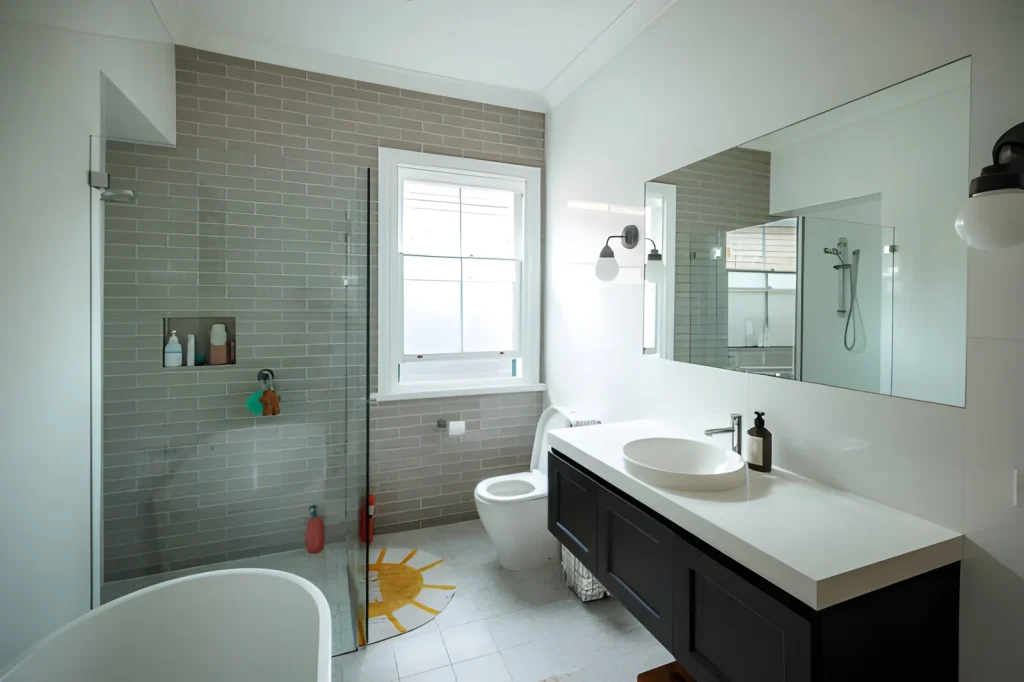
- Zoned Wet and Dry Layout: Separating the shower area from the vanity and WC using a glass partition or raised marble ledge keeps 70% of the bathroom completely dry during daily use.
- Epoxy Tile Grouting: Epoxy grout—a non-porous resin compound used between tiles—resists water absorption, dark stains, and mold far better than traditional cement-based grout.
- Anti-Skid Vitrified Tiles: Larger format tiles with fewer grout lines reduce the surface area where dirt accumulates while providing safe traction underfoot.
- Wall-Hung Fixtures: Wall-mounted toilets and vanities leave the floor completely clear, allowing a quick sweep or mop without reaching behind tight porcelain bases.
- Effective Exhaust Ventilation: A high-capacity exhaust fan actively extracts moist air, keeping mirror surfaces fog-free and drying out floor surfaces quickly.
How to Keep a Bathroom Clean Daily in 5 Simple Steps
Building a quick daily habit prevents deep-seated grime and reduces the need for heavy weekend chemical scrubbing:
- Squeegee Glass & Tiles After Showers: Use a rubber hand squeegee to scrape standing water off glass enclosures and tiled walls right after showering.
- Wipe Down Chrome Fittings: Dry off faucets, showerheads, and mixer handles with a soft microfiber cloth to prevent hard-water spots from etching into the finish.
- Run the Exhaust Fan for 15–20 Minutes: Leave the exhaust fan running after bathing to pull out trapped humidity and clear condensation from walls and ceilings.
- Clear Hair from Floor Drains: Pick up stray hair from the drain grate daily to ensure wastewater flows freely without backing up into dry zones.
- Keep Countertops Dry & Decluttered: Store daily toiletries inside mirror cabinets or vanity drawers, and wipe the washbasin dry after morning routines.
For bathrooms with structural drainage issues, uneven floor slopes, or deteriorating tile joints, daily cleaning alone may not keep the space dry. BathUrChoice’s design and execution team evaluates layout bottlenecks, plumbing slopes, and tile conditions during a site visit to recommend effective upgrades.
Common Misconceptions About Bathroom Cleaning
- Myth 1: Harpic or harsh acid cleaners are safe for daily tile cleaning.
- Fact: Acidic cleaners strip away tile glazes, dissolve cement grout over time, and ruin chrome finishes on faucets.
- Myth 2: A clean-looking tile floor means there is no moisture problem underneath.
- Fact: Water can pass through cracked cement grout lines and collect beneath tiles, causing hidden sub-floor dampness even if surface tiles appear dry.
- Myth 3: You don’t need an exhaust fan if your bathroom has a window.
- Fact: Small bathroom windows rarely provide sufficient cross-ventilation to clear heavy steam quickly, especially during humid monsoon weather.
- Myth 4: Re-grouting over old cement grout fixes water leaks permanently.
- Fact: Applying fresh grout over damp, failing cement grout merely masks underlying seepage without fixing the root sub-surface waterproofing issue.
When to Bring in a Professional Assessment
If daily cleaning fails to keep your bathroom dry or smelling fresh, underlying structural or plumbing issues may be present. Request a professional on-site assessment if you notice any of these warning signs:
- Water pooling in corners instead of flowing smoothly toward the floor drain.
- Persistent damp patches, flaking paint, or salt deposits on walls adjoining the bathroom.
- Dark, crumbling grout lines that stay damp hours after the bathroom is used.
- Musty, unpleasant odors that persist despite thorough surface washing and air fresheners.
- Water stains or damp spots reported on the ceiling of the apartment directly below yours.
Frequently Asked Questions
How can I remove hard water stains from bathroom fittings daily?
Wiping chrome taps and showerheads dry with a microfiber cloth immediately after use prevents hard-water spots from drying and bonding to the metallic surface.
How much does a basic bathroom layout upgrade cost?
Basic civil work and tiling start around ₹150 per sq ft. However, the final investment depends on overall bathroom dimensions, material selection, and plumbing changes—confirmed after a free on-site visit.
What is the best way to prevent mold in a windowless apartment bathroom?
Install an appropriately sized exhaust fan, use epoxy grout between tiles, squeegee shower walls daily, and leave the bathroom door slightly ajar after use to encourage airflow.
How long does a typical bathroom renovation take?
Renovation timelines vary depending on project scope, plumbing modifications, and drying times for waterproofing layers. Most standard apartment remodels typically take between 10 to 18 days.
Why does water pool on my bathroom floor even after cleaning?
Water pooling usually indicates an incorrect floor slope toward the drain tile. Correcting slope issues requires lifting floor tiles, re-screeding the base floor, and relaying tiles with accurate drainage falls.
How do I schedule a professional site inspection in HITEC City or Kukatpally?
You can book a free on-site assessment through BathUrChoice, where a technical specialist inspects floor slopes, plumbing lines, and dampness levels to provide an itemized quote.