Table of Contents
What is the Price of Anti-Skid Bathroom Tiles in Hyderabad?
Planning a flooring upgrade for a 15-year-old Secunderabad flat, a luxury villa in Jubilee Hills, or a newly handed-over apartment in Gachibowli requires understanding both material rates and hidden installation costs. Homeowners researching the price of anti-skid bathroom tiles in Hyderabad soon discover that the tile box price is only one component of a safe, leak-free floor.
Navigating regional factors—such as mineral-heavy hard water that leaves slick calcium films on glazed floors, high monsoon humidity, and apartment drop-slab slope requirements—demands proper tile specifications, polymer adhesives, and chemical tanking. This comprehensive guide covers tile material rates, civil preparation costs, complete 7-stage installation steps, and maintenance distinctions to help you budget accurately.
Last updated: November 2026
What Does Installing Anti-Skid Bathroom Tiles Actually Involve?
Installing anti-skid bathroom tiles is a multi-step civil engineering and finishing process that replaces hazardous, slick surfaces with high-friction flooring rated R10 or R11 (with a PEI rating of 4 or above). It encompasses old tile demolition, sloped cement screed preparation, dual-coat chemical waterproofing tanking (complying with IS 13435), polymer-modified adhesive setting, and non-porous epoxy joint grouting.
Why Hyderabad Water & Architecture Impact Tile Pricing and Selection
Evaluating the price of anti-skid bathroom tiles in Hyderabad across localities like Kondapur, Madhapur, HITEC City, Kukatpally, Banjara Hills, and Secunderabad requires accounting for local environmental and construction conditions:
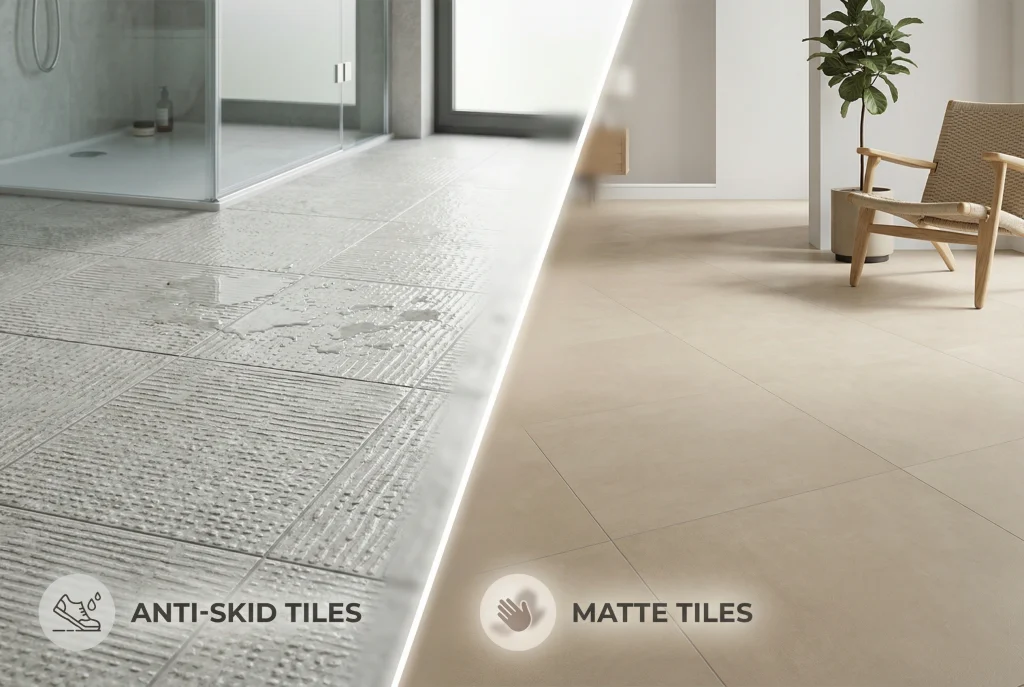
- Hard-Water Mineral Scaling: Borewell and municipal water supplies across Miyapur and Kondapur carry high concentrations of dissolved calcium and magnesium. Smooth ceramic tiles quickly develop a white mineral glaze that becomes dangerously slippery when wet. Textured matte vitrified tiles maintain foot traction despite hard-water scaling.
- Monsoon Atmospheric Humidity: During the monsoon season (June–September), elevated humidity slows natural surface evaporation. Porous tiles or standard white cement grouts absorb standing water, leading to sub-floor dampness and dark mold lines. Specifying ultra-low porosity vitrified tiles (< 0.5% water absorption) paired with waterproof epoxy grout protects your slab.
- Drop-Slab Apartment Gradient Constraints: High-rise apartments along the IT corridor use drop-slab floor structures. Creating a proper 1:100 drainage slope toward floor traps (nahani traps) requires calibrated screed mortar beds, which adds to civil preparation costs.
- Lifestyle-Driven Tile Sizing: Families with young children or elderly parents benefit from 600mm × 600mm matte vitrified tiles with R11 slip resistance. Bachelor IT professionals or luxury villa owners often prefer large-format 1200mm × 600mm full-body porcelain slabs in satin-matte finishes, which minimize grout grid lines and visually expand compact spaces—though they require a perfectly flat sub-floor and specialized laying labor.
The 7 Stages of Bathroom Renovation & Anti-Skid Tile Installation
Achieving a durable, slip-free bathroom floor depends on executing a strict civil sequence. Skipping sub-surface preparation leads to hollow-sounding tiles, cracked joints, and lower-floor ceiling seepage.
1.Stage 1: Site Survey & Technical Layout Planning: Floor slope mapping, friction checks, and drop-slab inspection.
A technical specialist inspects existing tile conditions, checks sub-slab dampness, measures floor drain depths, and drafts a line-itemized cost estimate.
2.Stage 2: Civil Demolition & Sub-Base Stripping: Safe removal of old tiles, eroded mortar, and obsolete floor traps.
Slippery existing tiles and loose screed plaster are chipped away down to raw concrete masonry. Civil debris is bagged and hauled off-site per municipal norms.
3.Stage 3: Plumbing Rough-In & Floor Trap Setting: Upgrading waste lines and adjusting drain collar heights.
Aging drainage lines are upgraded to modern UPVC/CPVC pipes, and multi-flow floor traps are set at exact finished floor heights to prevent water pooling.
4.Stage 4: Sub-Floor Screed & Chemical Waterproofing: Sloped polymer screed, dual chemical coats, and 24-hour flood test.
A polymer-modified cement mortar screed sloped toward drains is laid, followed by a dual-coat elastomeric tanking membrane (complying with IS 13435) extended 6 inches up wall bases, verified via a mandatory 24-hour ponding leak test.
5.Stage 5: Precision Anti-Skid Tile Laying: Laying R10/R11 anti-skid tiles using polymer-modified thin-set adhesive.
Anti-skid vitrified or porcelain tiles (PEI rating 4 or above) are set using Type 2 polymer-modified tile adhesive (complying with IS 15477) with uniform spacers.
6.Stage 6: Waterproof Epoxy Joint Grouting: Sealing all tile joints with non-porous, stain-resistant resin.
Tile gaps are cleaned of dust and filled with color-matched, waterproof epoxy resin grout, creating a sealed top barrier against shower water.
7.Stage 7: Fixture Mounting & Final Quality Handover: Sanitaryware mounting, silicone perimeter sealing, and final check.
Wall-hung or floor-mounted EWCs and glass shower screens are installed, expansion gaps are sealed with anti-fungal silicone, and drainage flow is tested.
Anti-Skid Tile Categories & Renovation Levels: Scope, Timelines, and Costs
Understanding both material-only tile pricing and complete installed renovation tiers helps homeowners budget accurately without surprise expenses:
Indicative Anti-Skid Tile Material Price Ranges (Hyderabad Market)
- Standard Anti-Skid Ceramic Floor Tiles (300mm × 300mm / 400mm × 400mm): ₹45 – ₹85 per sq ft (Material only; moderate water absorption, suitable for low-traffic guest baths).
- Matte Anti-Skid Vitrified Tiles (600mm × 600mm, PEI 4+): ₹75 – ₹150 per sq ft (Material only; ultra-low porosity, high slip grip, ideal for Hyderabad apartments).
- Full-Body Porcelain Anti-Skid Slabs (1200mm × 600mm, R10/R11): ₹140 – ₹280 per sq ft (Material only; maximum durability, minimal grout lines, suited for luxury homes).
- Polymer Adhesive & Epoxy Grout Consumables: ₹45 – ₹80 per sq ft (Material cost for Type 2 thin-set adhesive and two-part epoxy resin grout).
Complete Installed Renovation Tiers
| Renovation Tier | Scope Included | Primary Suitability | Approximate Timeline | Estimated Installed Cost Range (Hyderabad Market) |
| Polymer Tile Overlay (Where height permits) | Laying new anti-skid tiles directly over sound old tiles using Type 3 adhesive + epoxy grout | Structurally sound, leak-free floors needing quick slip protection | 2 to 4 working days | ₹140 – ₹240 per sq ft |
| Standard Floor & Waterproofing Overhaul | Full floor demolition, sloped screed, dual-coat waterproofing, R10 vitrified tiles, epoxy grout | 10–20 year old apartments, resolving floor dampness & slip hazards | 6 to 10 working days | Starts at ₹150/sq ft basic civil labor; ₹220 – ₹380 per sq ft overall |
| Full Bathroom Remodel & Re-Tiling | Floor & wall tile stripping, CPVC plumbing upgrade, tanking membrane, anti-skid floor, new fixtures | Complete modernization in apartments, villas, & independent houses | 10 to 16 working days | Scope-dependent; confirmed after on-site assessment |
Note: All cost figures represent broad market starting ranges for tiles, specialized adhesives, screed prep, waterproofing chemicals, and labor. Exact pricing varies by project scope and is confirmed after a free on-site assessment.
For a complete guide on choosing the right material dimensions for compact spaces, read our article on what flooring is best for small bathroom.
Signs Your Floor Needs Full Renovation vs Signs It Just Needs Maintenance
Distinguishing between surface traction loss and deep sub-floor failure prevents unnecessary demolition while ensuring serious leaks are addressed promptly.
Visual Inspection: Identify the Problem
1. Surface Problems (Cleaning & Maintenance)
- Soap stains or white mineral marks on tiles.
- Tiles are smooth and not damaged.
- Cement grout looks dirty or stained.
2. Structural Problems (Repair or Renovation Needed)
- Water coming out through tile gaps.
- Hollow sound when tapping floor tiles.
- Paint peeling off bedroom walls.
- Water collecting in floor corners.
Signs You Need Full Tile Replacement & Sub-Floor Renovation
- Hollow-Sounding or Loose Tiles: Floor tiles that make a hollow echoing sound when tapped, indicating adhesive debonding or trapped sub-floor water.
- Water Oozing Through Joints: Moisture seeping upward through grout lines when stepped on.
- Shared-Wall Dampness: Flaking paint, bubbling plaster, or white salt deposits (efflorescence) along the lower 12 inches of bedroom walls bordering the bathroom.
- Chronic Water Pooling: Standing water collecting in shower corners due to improper original floor screed slopes.
Issues Manageable via Routine Maintenance
- Hard-water calcium film or soap scum buildup that can be removed with mild descaling cleaners.
- Structurally sound smooth tiles where a temporary topical anti-slip chemical etch can improve grip.
- Isolated surface grout discoloration in dry vanity zones where sub-floor tanking remains intact.
For step-by-step advice on resolving slip risks across different property types, see our guide on how to fix slippery bathroom floor in Hyderabad.
How Long Does a Bathroom Tile Renovation Take in Hyderabad?
A standard floor tile replacement and waterproofing renovation in a Hyderabad apartment or independent house typically takes 6 to 10 working days, while a complete floor-and-wall bathroom remodel takes 10 to 16 working days. Key technical and operational factors affecting the schedule include:
- Waterproofing Cure & Flood Test Intervals: Dual-coat chemical tanking membranes require 6 to 12 hours of drying per coat, followed by a mandatory 24-hour ponding leak test before tile installation begins.
- Apartment Society Work Hour Limits: Gated communities in Kondapur, Gachibowli, and HITEC City restrict noisy civil chipping to specific weekday hours, extending total calendar days.
- Large-Format Tile Cutting Complexity: Oversized 1200mm × 600mm slabs require precise diamond-wheel cutting around floor drains to maintain proper drainage slopes.
- Monsoon Humidity: High ambient moisture during June–September slows screed mortar drying before polymer adhesives can be applied.
What to Expect During the Renovation Process
Homeowners upgrading their bathroom flooring while occupying the property should prepare for specific daily operational realities:
- Civil Demolition Noise: Chipping old tiles and screed beds generates significant noise and vibration during the first 1 to 2 days.
- Dust Containment: Fine masonry dust travels easily; professional teams isolate the bathroom doorway with heavy plastic sheeting to protect adjacent rooms.
- Temporary Bathroom Inaccessibility: The bathroom cannot be used during demolition, waterproofing cure cycles, the 24-hour flood test, and adhesive setting (typically 24 hours post-tiling).
- Quality Verification Checkpoints: Key milestones include inspecting raw slab cleanliness, verifying the 24-hour flood test water level, checking drainage slope accuracy with a spirit level, and confirming full epoxy grout joint coverage.
Technical Standards & Society Regulations
Adhering to established Indian construction standards ensures long-term slip safety and prevents recurring moisture damage:
- BIS Tile Standards (IS 15622): Specifies performance criteria for pressed ceramic and vitrified tiles, requiring water absorption below 0.5% and PEI abrasion class 4 or higher for residential wet floors.
- Tile Adhesive Standards (IS 15477): Mandates Type 2 polymer-modified thin-set adhesives for laying vitrified tiles over waterproofed screeds, preventing tile hollowness under wet conditions.
- National Building Code (NBC 2016) Drainage Slopes: Recommends a minimum floor slope gradient of 1:100 (10mm drop per 1 meter of run) toward floor traps so water drains rapidly without pooling.
- Telangana Apartment Society Permissions: Under Telangana apartment ownership guidelines, homeowners must obtain a written NOC from the building management committee, adhere to approved noise windows, protect service elevators, and ensure off-site disposal of bagged civil debris.
- Contractor Assessment: Contractors like BathUrChoice offer free on-site assessments before providing an itemized quote—the only reliable way to get an accurate bathroom renovation cost for your specific space.
To understand why sub-surface membranes are critical beneath new floor tiles, read our comprehensive bathroom waterproofing guide.
Frequently Asked Questions
What is the price of anti-skid bathroom tiles in Hyderabad per square foot?
Material-only prices range from ₹45–₹85 per sq ft for standard anti-skid ceramic tiles, ₹75–₹150 per sq ft for R10/R11 matte vitrified tiles, and ₹140–₹280 per sq ft for full-body porcelain slabs. Complete installation—including civil prep, waterproofing, polymer adhesive, and epoxy grout—typically ranges between ₹220 to ₹380 per sq ft, confirmed after a free on-site assessment.
Why is polymer adhesive required instead of regular cement for anti-skid vitrified tiles?
Vitrified tiles have less than 0.5% water absorption, meaning traditional cement slurry cannot penetrate the tile back to form a mechanical bond. Polymer-modified thin-set adhesive (IS 15477) creates a strong chemical and mechanical bond that prevents tiles from popping or sounding hollow.
What anti-skid rating should I look for when buying bathroom floor tiles?
Look for tiles rated R10 or R11 for slip resistance with a structured matte finish and a PEI rating of 4 or above for surface durability. Avoid glossy or polished finishes on bathroom floors.
Does installing anti-skid tiles require redoing the sub-floor waterproofing?
Yes, if existing floor tiles are chipped away, the underlying waterproof layer is inevitably damaged. Applying a fresh dual-coat chemical tanking membrane (IS 13435) and running a 24-hour flood test is essential before laying new tiles.
How much extra does epoxy grout cost compared to regular white cement grout?
Epoxy resin grout materials typically add ₹20 to ₹40 per sq ft compared to basic cement grout. However, because epoxy grout is completely non-porous, waterproof, and immune to hard-water staining and black mold, it prevents costly sub-floor seepage repairs later.
Can I install large-format 1200mm × 600mm anti-skid tiles in a small bathroom?
Yes. Large-format matte vitrified slabs reduce grout joint lines, making a small bathroom look much wider. However, they require a flat, well-calibrated screed bed and skilled tilers to maintain proper drainage slopes around floor traps.
How long does a bathroom floor tile renovation take in an apartment?
A floor-only overhaul with fresh waterproofing typically takes 6 to 10 working days, while a complete floor-and-wall bathroom renovation takes 10 to 16 working days, depending on society work-hour limits and curing intervals.
How can I get an accurate, itemized quote for my bathroom tile renovation?
Contractors offer free on-site assessments before providing an itemized quote—the only reliable way to get an accurate bathroom renovation cost for your specific space.
Final Educational Takeaway
Evaluating the price of anti-skid bathroom tiles in Hyderabad requires looking beyond box rates to consider the complete flooring system. Pairing R10/R11 matte vitrified tiles with dual-coat elastomeric waterproofing, Type 2 polymer-modified adhesives, calibrated 1:100 drainage slopes, and non-porous epoxy grouting ensures your bathroom floor remains slip-safe, easy to clean, and completely watertight for over a decade.