Dealing with active bathroom seepage? Explore our Bathroom Waterproofing Services in Hyderabad featuring 100% leak-proof chemical tanking and a 5-year warranty.
Table of Contents
What is the Cost of Waterproofing a Bathroom in Hyderabad?
Planning a bathroom overhaul in an independent house in Secunderabad, a luxury villa in Jubilee Hills, or a multi-story home in Kukatpally requires a clear understanding of sub-surface moisture protection costs. Homeowners evaluating what is the cost of waterproofing a bathroom in Hyderabad soon discover that spending on proper chemical membranes and screed slopes represents a fraction of the total remodeling budget, yet it safeguards the entire house from costly structural damage.
Addressing local realities—such as mineral-heavy hard water that degrades cement mortar, high monsoon humidity, and ground moisture movement in independent properties—demands an engineered, multi-layer approach. This comprehensive guide covers chemical application rates, civil preparation expenses, complete 7-stage renovation steps, material comparisons, and practical cost-saving advice to keep your home completely dry and leak-free.
Last updated: November 2026
What Does Bathroom Waterproofing Actually Involve?
Bathroom waterproofing is a multi-step civil engineering and chemical tanking process that creates a continuous, impermeable barrier beneath floor tiles and behind wall plaster. It replaces worn-out sub-floor screeds with polymer-modified cementitious or elastomeric liquid membranes (complying with IS 13435 standards), reinforces pipe penetrations with elastomeric collars, and seals the sub-base before tile laying to prevent daily shower water from soaking into concrete slabs and brick masonry.
Why Local Hyderabad Conditions Influence Waterproofing Costs
Determining waterproofing expenses across Hyderabad localities—including Gachibowli, Kondapur, Madhapur, Jubilee Hills, Banjara Hills, and Secunderabad—requires evaluating specific regional construction methods and environmental pressures:
- Independent House Slab & Soling Dynamics: Ground-floor bathrooms in independent houses and villas sit directly above brick soling or RCC base slabs. Without dual-layer chemical tanking extended 6 to 12 inches up wall bases, capillary action draws ground moisture upward, causing paint peeling and salt deposits (efflorescence) along hallway walls.
- Hard-Water Mineral Scaling & Mortar Erosion: Groundwater and borewell supplies across regions like Miyapur and Kukatpally contain high concentrations of dissolved calcium and magnesium. Mineral-rich water accelerates the breakdown of traditional cement mortar beds, making specialized polymer-modified screeds essential for long-term protection.
- Monsoon Hydrostatic Pressure: Heavy rainfall during the monsoon season (June–September) increases atmospheric humidity and sub-soil water tables. Trapped moisture beneath unsealed floor tiles exerts upward hydrostatic pressure, forcing water through porous cement grout joints if an elastomeric membrane is missing.
- Pipe Chasing & Drop-Slab Penetrations: Concealing modern CPVC/UPVC water supply lines and setting multi-flow floor traps (nahani traps) requires wall chasing and floor core drilling. Waterproofing around these high-risk pipe junctions demands specialized elastomer collars and polyurethane (PU) sealants, influencing labor and material costs.
The 7 Stages of a Complete Waterproofing & Bathroom Renovation
Executing a professional waterproofing overhaul during a bathroom renovation requires a strict, sequential workflow. Skipping curing intervals or flood testing compromises the chemical barrier.
1.Stage 1: Site Survey & Technical Layout Planning: Moisture mapping, pipe inspection, and line-item scope breakdown.
A technical specialist inspects wall dampness, evaluates slab structural integrity, maps drain trap positions, and drafts an itemized cost estimate.
2.Stage 2: Civil Demolition & Sub-Base Stripping: Safe removal of old tiles, eroded mortar screed, and obsolete pipes.
Existing tiles, loose screed plaster, and old plumbing lines are chipped away down to raw concrete slabs and structural brickwork. Debris is bagged and hauled off-site per municipal norms.
3.Stage 3: Plumbing Rough-In & Drain Collar Preparation: Routing CPVC/UPVC water lines and floor trap collars.
Aging supply pipes are replaced with modern CPVC/UPVC lines. Drainage lines and floor traps are set at exact finished slope levels and sealed around base collars.
4.Stage 4: Sub-Floor Screed & Chemical Waterproofing: Sloped polymer screed, dual chemical coats, and 24-hour flood test.
A fresh polymer-modified cement screed sloped toward drains is laid, followed by a dual-coat elastomeric waterproofing membrane (complying with IS 13435) extended up wall bases, verified via a mandatory 24-hour ponding flood test.
5.Stage 5: Precision Tile Laying & Laser Leveling: Setting anti-skid floor tiles and wall slabs with polymer adhesive.
Glazed wall tiles and anti-skid vitrified floor tiles are set using polymer-modified thin-set mortar adhesive (complying with IS 15477) with uniform tile spacers.
6.Stage 6: Waterproof Epoxy Joint Grouting: Filling all tile joints with non-porous resin filler.
Tile gaps are cleared of dust and filled with stain-resistant, non-porous epoxy resin grout. Epoxy grout creates a top barrier that blocks surface water from reaching the sub-screed.
7.Stage 7: Sanitaryware Mounting & Final Inspection: Sanitaryware mounting, perimeter silicone sealing, and handover.
Wall-hung EWCs, vanity basins, frameless glass screens, and faucets are mounted. Plumbing lines undergo pressure testing, perimeters are sealed with anti-fungal silicone, and the site is handed over.
Waterproofing Systems Compared: Scope, Timelines, and Costs
Evaluating different waterproofing applications helps homeowners align technical requirements with practical market cost ranges in Hyderabad:
| Waterproofing Method / Scope | Material & Chemical Specification | Primary Suitability | Approximate Execution Duration | Estimated Cost Range (Hyderabad Market) |
| Topical Grout & Joint Resealing | Waterproof epoxy grout + anti-fungal silicone sealant | Surface touch-ups; sound underlying screed | 1 to 2 working days | ₹40 – ₹70 per sq ft (Surface area) |
| Cementitious Polymer Coating | 2-coat rigid polymer-modified cementitious slurry | Low-risk dry zones, secondary powder rooms | 3 to 5 working days | ₹50 – ₹90 per sq ft (Chemical coating only) |
| Dual-Coat Elastomeric Membrane Tanking | Flexible elastomeric liquid membrane + fiber mesh corners | Standard & high-use wet shower zones | 4 to 6 working days (Including 24-hr flood test) | ₹90 – ₹160 per sq ft (Chemical membrane application) |
| Complete Full Bathroom Renovation & Waterproofing | Demolition, new CPVC lines, screed, dual-coat membrane, tiling, epoxy grout | 10–20 year old homes, resolving active seepage | 10 to 14 working days | Starts at ₹150/sq ft basic civil labor; ₹180 – ₹350/sq ft overall project cost |
For a detailed breakdown of complete remodeling steps, see our comprehensive bathroom renovation checklist in Hyderabad.
Signs Your Bathroom Needs Full Waterproofing vs Minor Maintenance
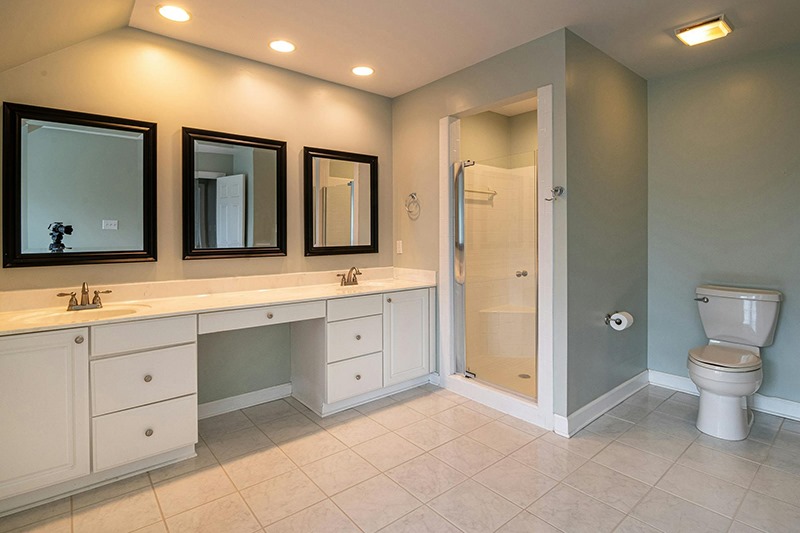
Differentiating between surface maintenance issues and deep structural sub-floor failures prevents unnecessary civil demolition while ensuring serious leaks are resolved before causing major damage.
Visual Inspection: Surface Issues vs. Structural Problems
| Surface Issues (Basic Maintenance) | Structural Problems (Need Repair Work) |
|---|---|
| Discoloured or damaged surface silicone | Peeling paint on shared walls due to moisture |
| Minor water leakage from tap washers | Water coming out through tile joints |
| Stained or dirty grout lines | White salt deposits appearing on walls (efflorescence) |
| Usually needs cleaning, sealing, or minor repairs | May require waterproofing or plumbing repairs |
| Often limited to the visible surface | May indicate a deeper water leakage or dampness problem |
Signs You Need Complete Sub-Floor Waterproofing & Renovation
- Active Shared-Wall Seepage: Flaking paint, bubbling plaster, or white salt crystals (efflorescence) appearing along the lower 12 to 18 inches of bedroom walls sharing a boundary with the bathroom.
- Sub-Floor Tile Saturation: Water oozing upward through tile grout joints when stepped on, or floor tiles that sound hollow across large sections.
- Lower-Floor Ceiling Stains: Water ring marks or damp patches reported on the ceiling directly beneath the bathroom slab.
- Persistent Musty Odor: A damp, heavy smell that remains after cleaning, indicating organic mold growth inside the wet sub-floor screed.
Issues Manageable via Routine Maintenance
- Isolated surface grout discoloration in dry vanity zones where the underlying screed remains completely dry.
- Minor silicone peeling around washbasin countertops or shower door edges.
- A slow drip from an exposed faucet spout that drains directly into a basin.
For diagnostic steps on identifying concealed moisture behind plaster, read our guide on how to check seepage in walls in bathroom.
How Long Does a Bathroom Waterproofing Renovation Take in Hyderabad?
A complete waterproofing overhaul and bathroom renovation in a Hyderabad independent house or apartment typically requires 10 to 14 working days. Homeowners frequently inquire about timelines because project delays increase daily labor charges.
Key technical and environmental factors influencing your execution schedule include:
- Chemical Membrane Cure Intervals: Polymer-modified and elastomeric liquid coatings require non-negotiable drying intervals (typically 6 to 12 hours between coats) to form a seamless rubberized sheet.
- Mandatory 24-Hour Ponding Flood Test: Once the membrane cures, the floor drain is plugged and filled with 2 to 3 inches of standing water for 24 hours to verify zero leak migration before laying floor screed or tiles.
- Sub-Floor Screed Mortar Drying: Fresh cement mortar screeds laid to establish drainage slopes must cure adequately before polymer tile adhesives are applied.
- Monsoon Humidity: High atmospheric humidity during monsoon months slows plaster screed drying and chemical membrane curing times.
What to Expect During the Waterproofing & Renovation Process
Planning a structural waterproofing overhaul while occupying a home requires managing daily operational routines effectively:
- Civil Demolition Noise: Chipping old floor tiles and eroded screed plaster generates significant noise during the first 1 to 2 days of demolition.
- Dust Control Containment: Fine masonry dust travels quickly through interior spaces. Professional execution teams isolate work zones with heavy plastic drop sheets and seal adjacent doorways.
- Temporary Water Main Shut-Offs: Main water lines will be turned off periodically while plumbers replace aging supply pipes and connect modern CPVC lines to risers.
- Quality Verification Checkpoints: Essential checkpoints include reviewing raw slab soundness, verifying the 24-hour flood test water level, checking floor slope accuracy with a spirit level, and confirming complete epoxy grout coverage.
Key Building Standards & Technical Regulations
Adhering to established national construction codes protects your property against recurring sub-surface leaks:
- BIS Waterproofing Specifications (IS 13435 / IS 2645): Mandates dual-coat polymer-modified cementitious or elastomeric chemical tanking membranes extended at least 150mm to 300mm (6 to 12 inches) up wall bases to form an impermeable basin.
- Tile Adhesive Performance (IS 15477): Requires Type 2 polymer-modified thin-set mortar adhesives for setting vitrified floor tiles over waterproofed screeds, ensuring high shear bond strength under constant wet conditions.
- National Building Code (NBC 2016) Drainage Slopes: Specifies a minimum floor slope gradient of 1:100 (10mm drop per 1 meter of run) toward waste traps to eliminate standing surface water puddles.
- Contractor Selection: Contractors like BathUrChoice offer free on-site assessments before providing an itemized quote—the only reliable way to get an accurate bathroom renovation cost for your specific space.
To learn more about how proper chemical membranes protect your long-term structural investment, read our detailed article on the importance of bathroom waterproofing.
Frequently Asked Questions
What is the cost of waterproofing a bathroom in Hyderabad per square foot?
Chemical elastomeric waterproofing membrane application typically costs between ₹90 to ₹160 per sq ft for materials and chemical labor. If a full civil renovation (tile stripping, screed prep, new piping, tiling, and epoxy grouting) is required, basic labor starts around ₹150/sq ft, with overall project costs ranging between ₹180 to ₹350/sq ft — confirmed after an on-site assessment.
Can bathroom seepage be fixed without removing floor tiles?
Topical epoxy regrouting and tile sealants can fix minor surface joint leaks in dry areas. However, if the underlying waterproofing membrane has failed or sub-floor screed is saturated, removing floor tiles to re-apply a fresh chemical membrane is necessary for a long-term solution.
What is a 24-hour ponding test in bathroom waterproofing?
A 24-hour ponding test involves plugging floor drains and filling the waterproofed chemical membrane with 2 to 3 inches of standing water for 24 hours. It verifies complete watertight integrity before screed protection or tile laying begins.
Why does wall paint peel outside the bathroom in independent houses?
Paint peeling on bedroom walls sharing a boundary with the bathroom is caused by capillary moisture migration. When sub-floor waterproofing fails, standing water soaks into the porous brick masonry and rises through the wall, pushing off interior paint.
Which type of waterproofing membrane is best for Hyderabad bathrooms?
Flexible elastomeric liquid membranes reinforced with fiber mesh at corner joints provide superior protection. Unlike rigid cementitious coatings, elastomeric membranes accommodate minor structural settling without cracking.
How long does a professional bathroom waterproofing application last?
When applied correctly over a clean concrete slab using high-grade elastomeric chemicals, verified via a 24-hour flood test, and sealed with epoxy grout, a professional system provides reliable protection for 12 to 15+ years.
How do I get an accurate cost quote for waterproofing my bathroom?
Contractors offer free on-site assessments before providing an itemized quote—the only reliable way to get an accurate bathroom renovation cost for your specific space.
Final Educational Takeaway
Understanding the cost of waterproofing a bathroom in Hyderabad is about evaluating long-term structural protection over short-term savings. By investing in a dual-coat elastomeric membrane, conducting a mandatory 24-hour flood test, calibrating proper floor screed slopes, and sealing joints with non-porous epoxy grout, you ensure your home remains completely dry, hygienic, and free from recurring seepage for years to come.