Table of Contents
How to Make a Small Bathroom Look Expensive in Hyderabad Apartments
Stepping into a compact 35-to-45-square-foot bathroom in a 15-year-old Secunderabad flat or customizing an uninspired builder-grade bath in a new Gachibowli apartment presents a classic design challenge. Learning how to make a small bathroom look expensive relies on eliminating visual clutter, maximizing floor clearance, and pairing high-grade materials that survive local environmental wear.
Whether you are a young IT couple upgrading a newly acquired flat in Kondapur or a family remodeling a master bath in Banjara Hills, surface aesthetics alone will fail without proper civil execution behind the walls. This practical guide walks you through luxury material specs, Hyderabad-specific apartment constraints, step-by-step renovation stages, realistic cost ranges, and daily site expectations.
Last updated: November 2026
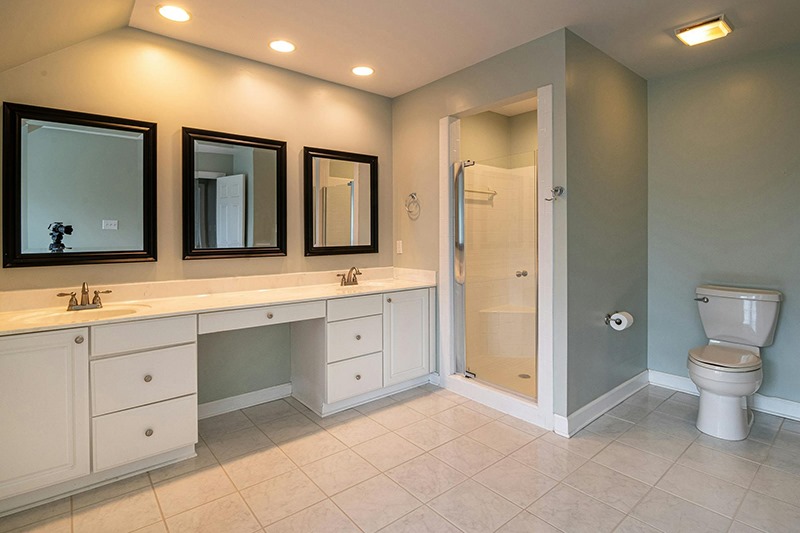
What Does Bathroom Renovation Actually Involve?
A bathroom renovation is a multi-stage civil engineering and interior remodeling process that strips an existing wet space down to its raw concrete slab and brick walls to rebuild its plumbing, waterproofing, and surface finishes. It encompasses civil demolition, concealed CPVC supply line routing, chemical tanking membrane application, sloped floor screeding, large-format vitrified tiling, and modern sanitaryware installation.
Why Hyderabad Apartment Realities Shape Luxury Small-Space Design
Achieving a refined, hotel-like finish in apartment neighborhoods across Madhapur, HITEC City, Kukatpally, Miyapur, and Secunderabad requires designing around four local building and environmental factors:
- Recessed Drop-Slab Plumbing Constraints: High-rise apartments in Hyderabad use drop-slab construction where the bathroom floor slab is recessed 12 to 18 inches below the main apartment floor to accommodate waste pipes. Relocating a toilet WC or floor drain trap (nahani trap) requires altering soil pipe gradients within this fixed slab depth—always consult your contractor and building management before moving main drainage outlets.
- Hard-Water Mineral Scaling: Borewell and municipal supplies in many localities carry elevated levels of dissolved calcium and magnesium. Glossy dark tiles and standard electroplated chrome taps quickly develop white mineral rings and pitting, making a newly remodeled bathroom look worn within months. Specifying matte vitrified tiles and solid brass fittings with PVD (Physical Vapor Deposition) brushed finishes preserves a crisp, upscale look with minimal maintenance.
- Monsoon Moisture & Shared-Wall Seepage: Heavy rainfall between June and September raises indoor humidity and slows natural drying in compact, enclosed bathrooms. In 15-to-25-year-old apartment buildings, degraded sub-floor waterproofing allows shower water to wick up brick masonry, blistering paint in adjoining bedrooms or staining the ceiling of the flat below.
- High-Rise Society Work Rules: Gated communities along the IT corridor strictly regulate noisy civil chipping, service elevator usage, and construction debris (malba) removal. Aligning your remodel schedule with society work hours prevents daily labor delays and association penalties.
How to Make a Small Bathroom Look Expensive: Architectural & Material Upgrades
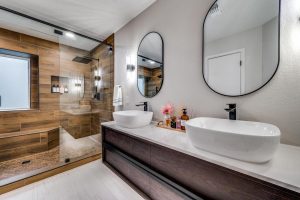
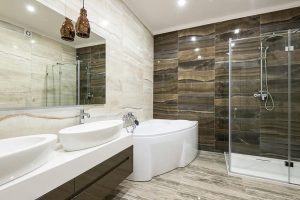
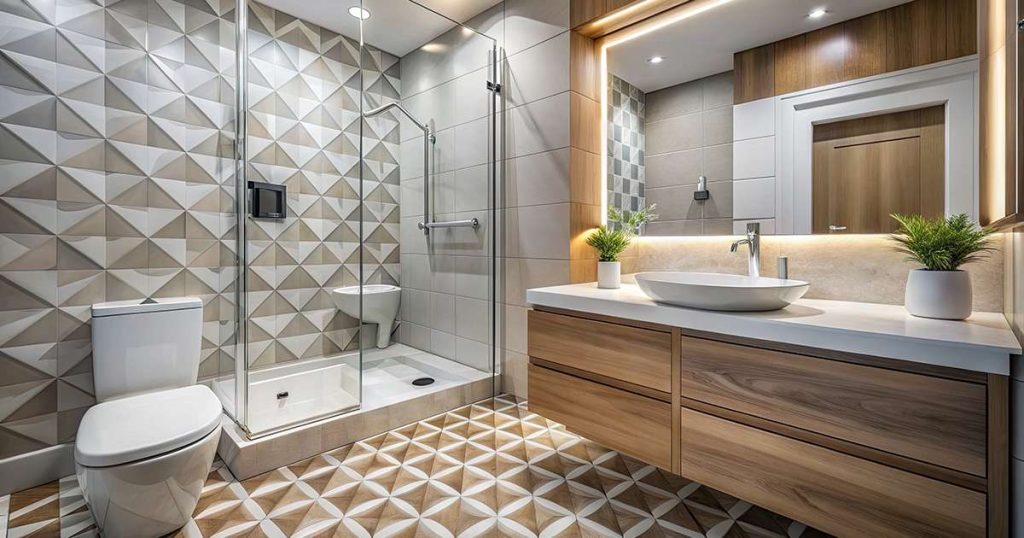
Understanding how to make a small bathroom look expensive comes down to replacing busy visual grids and bulky floor-standing fixtures with seamless surfaces and clean architectural lines:
- Specify Large-Format Matte Vitrified Tiles: Large-format 1200mm × 600mm tiles in a matt finish reduce grout lines and make a Hyderabad apartment bathroom feel significantly larger—but require a flat sub-floor screed, so check slab levels with your contractor before specifying. Choose vitrified floor tiles with a PEI abrasion rating of 4 or above and an anti-skid surface in light neutral tones like warm greige, soft ivory, or travertine beige.
- Upgrade to PVD Brushed Metallic Fittings: Swapping basic chrome mixers for solid forged brass fittings in PVD brushed nickel, warm champagne gold, or gunmetal instantly elevates visual depth while resisting hard-water tarnishing and scratches.
- Install a Wall-Hung WC with a Concealed Cistern: Lifting the toilet bowl off the floor exposes continuous floor tiling underneath, visually expanding the room while eliminating tight corners around pedestal bases that trap dust and moisture.
- Use Fixed Frameless Glass Shower Partitions: Replace clinging shower curtains or heavy framed enclosures with a single fixed 8mm or 10mm toughened clear glass panel (24 to 30 inches wide). This separates wet and dry zones cleanly while keeping sightlines completely open. Explore layout options in our [INTERNAL LINK: wet and dry bathroom design] guide.
- Seal Joints with Color-Matched Epoxy Grout: Traditional white cement grout absorbs soapy water, cracks, and turns black with mold during monsoon months. Non-porous epoxy resin grout matched to your tile shade creates an almost invisible, stain-proof joint line.
- Layer Warm Indirect Lighting: Pair a recessed ceiling downlight with a warm-white (3000K–3500K) LED backlit mirror and an illuminated recessed shower niche to eliminate harsh shadows and create a calm spa atmosphere.
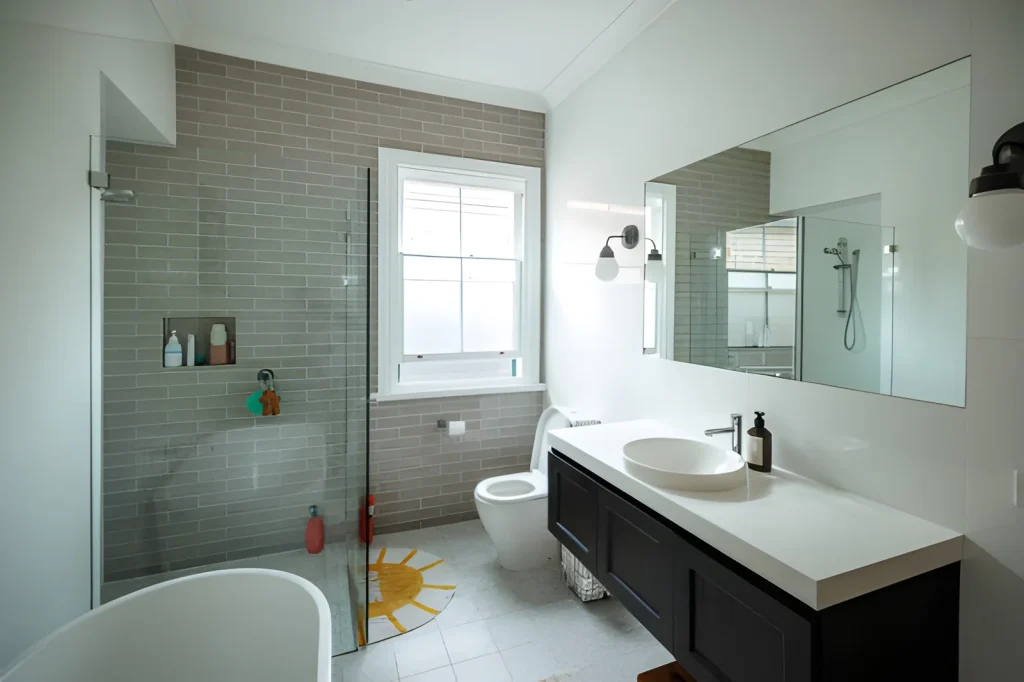
The 5 Stages of Bathroom Renovation — What Happens at Each Step
High-end finishes only stay pristine when supported by disciplined civil engineering underneath. A durable apartment bathroom remodel follows seven sequential execution stages:
[1. Survey & 3D Design] ──▶ [2. Civil Demolition] ──▶ [3. Plumbing & Tanking]
                                                               │
[7. Handover & Pressure Test] ◀── [6. Fixtures] ◀── [5. Tiling/Epoxy] ◀── [4. Screed & 24-Hr Flood Test]
- Site Survey & Technical Layout Design: A specialist measures exact room clearances, verifies drop-slab depths, inspects adjacent bedroom walls for dampness, tests incoming water pressure, and maps a balanced wet-and-dry layout.
- Civil Demolition & Debris Bagging: Old wall tiles, floor finishes, eroded mortar beds, and bulky sanitaryware are chipped down to raw brickwork and concrete slabs. All rubble (malba) is bagged immediately for off-site disposal per municipal guidelines.
- Plumbing Rough-In & Concealed Electricals: Aging galvanized iron (GI) or brittle PVC pipes are replaced with solvent-welded CPVC/UPVC lines. Wall chases are cut to house concealed shower diverters, wall-hung cistern frames, exhaust fan wiring, and LED mirror power points.
- Sub-Floor Screed & Chemical Waterproofing (Tanking): A fresh cement mortar screed sloped toward floor drains is cast, followed by a dual-coat chemical waterproofing membrane extended 6 to 12 inches up perimeter walls (and up to 7 feet in shower zones). A mandatory 24-hour ponding flood test verifies water-tightness before tiling begins.
- Precision Tiling & Laser Leveling: Large-format wall slabs and anti-skid floor tiles are laid using polymer-modified thin-set adhesives and tile leveling clips to eliminate lippage (uneven tile edges).
- Waterproof Epoxy Joint Grouting: Once adhesives cure, all tile gaps are cleaned and filled with color-matched, non-porous epoxy resin grout to seal the sub-floor against moisture.
- Sanitaryware Mounting, Silicone Sealing & Handover: Wall-hung closets, floating vanities, frameless glass screens, and PVD mixers are mounted. Concealed lines undergo hydrostatic pressure testing, perimeter edges are sealed with anti-fungal silicone, and the space is deep-cleaned for handover.
For a deeper look at protecting your sub-floor slab against leaks, explore our bathroom waterproofing guide.
Types of Bathroom Renovation — Which Level Do You Need?
Selecting the right scope ensures your remodeling investment aligns with your apartment’s structural condition and your household lifestyle—whether you are a bachelor IT professional seeking low-maintenance minimalism or a family with young children needing slip-resistant safety:
| Type | What It Includes | When to Choose It | Approximate Timeline | Cost Range (Hyderabad Market) |
| Cosmetic Luxury Refresh | PVD faucet swaps, backlit LED mirror, floating vanity, surface epoxy regrouting | Structurally sound tiles/plumbing; quick visual upgrade before moving in or renting | 3 to 6 working days | ₹35,000 – ₹65,000 (Lump sum) |
| Standard Same-Layout Remodel | Full tile stripping, dual-coat waterproofing, CPVC lines, anti-skid tiles, modern EWC | 12–20 year old apartments; keeping toilet and basin in original spots | 10 to 14 working days | Starts at ₹150 per sq ft for basic civil work; ₹180 – ₹320 per sq ft overall |
| Full Wet & Dry Zoned Remodel | Wall-hung WC with concealed cistern, frameless glass partition, recessed niches, floating vanity | Maximizing visual space in compact 35–45 sq ft master baths | 12 to 18 working days | ₹280 – ₹450 per sq ft (Varies by project scope) |
| High-Spec Boutique Overhaul | Large-format 1200mm × 600mm porcelain slabs, thermostatic diverters, custom cabinetry, mood lighting | Luxury apartments in Jubilee Hills, Banjara Hills, or HITEC City | 14 to 20 working days | ₹400 – ₹650+ per sq ft (Varies by project scope) |
Signs Your Bathroom Needs Renovation vs Signs It Just Needs Maintenance
Evaluating your bathroom’s underlying structural health prevents covering up active leaks with expensive new finishes:
Signs You Need a Full Civil Renovation
- Adjoining Wall Dampness: Peeling paint, bubbling plaster, or white salt deposits (efflorescence) appearing along the bottom 12 inches of bedroom walls sharing a border with the bathroom.
- Hollow or Loose Floor Tiles: Tiles that produce a hollow echo when tapped or ooze water upward through grout lines when stepped on, indicating trapped sub-floor moisture.
- Lower-Floor Ceiling Stains: Damp patches or water rings reported by residents in the apartment directly below yours.
- Corroded Concealed Piping: Weak water pressure caused by heavy internal mineral scaling inside 15-to-25-year-old embedded GI pipes.
Issues Manageable via Routine Maintenance
- A dripping spout or stiff mixer handle caused by a worn internal ceramic cartridge.
- Surface yellowing along perimeter silicone seals around the washbasin or shower screen.
- Minor hard-water mineral scale on taps or glass panels that clears with mild descaling solutions.
How Long Does a Bathroom Renovation Take in Hyderabad?
A complete luxury small-bathroom renovation in a Hyderabad apartment typically takes 10 to 18 working days. While cosmetic fixture updates finish within a week, full structural remodels depend on four non-negotiable technical timelines:
- Waterproofing Cure & Ponding Test: Dual-coat chemical waterproofing membranes require 12 to 24 hours to cure properly, followed by a mandatory 24-hour standing water flood test before floor tiles can be laid.
- Apartment Society Working Hours: Most high-rise societies restrict noisy demolition and tile cutting to specific weekday windows (typically prohibiting afternoon quiet hours and weekends), extending total calendar days.
- Large-Format Tile Precision: Laying 1200mm × 600mm vitrified slabs requires flat sub-floor screed preparation, dual-person handling, leveling clips, and precise diamond-wheel cutting around floor drains.
- Custom Glass Fabrication: Tempered frameless glass partitions are measured only after wall tiles are set, typically adding 3 to 4 working days for toughening and edge polishing.
What to Expect During the Renovation Process
Preparing your household for civil work inside an occupied apartment ensures smoother daily coordination:
- Demolition Noise & Vibration: Stripping old floor screeds and wall tiles generates loud percussion noise during the first 2 to 3 days of execution.
- Dust Containment Measures: Fine cement and tile dust travels easily into adjoining bedrooms. Ensure your execution team seals the bathroom doorway with heavy-duty plastic sheeting and protects hallway flooring.
- Temporary Bathroom Unavailability: The bathroom undergoing remodeling will be completely unusable for 10 to 14 days—plan shared access to a secondary bathroom in your flat.
- Quality Checkpoints: Verify four critical milestones before closing up surfaces: raw slab cleanliness, 24-hour flood test water retention, floor slope gradient toward drains (minimum 1:100 slope), and full epoxy grout joint depth.
Technical Standards & Local Building Regulations
Following established Indian construction standards and local housing regulations protects your property value and prevents neighbor disputes:
- BIS Waterproofing Standards (IS 2645 & IS 3346): Mandates integral waterproofing compounds and flexible polymer-modified membranes capable of bridging hairline concrete shrinkage cracks without tearing.
- Tile & Adhesive Standards (IS 15622 & IS 15477): Recommends vitrified floor tiles with a PEI abrasion rating of 4 or above and water absorption under 0.5%, laid with Type 2 polymer-modified thin-set adhesives for large-format slabs.
- NBC 2016 Ventilation & Plumbing Norms: National Building Code guidelines require concealed supply lines to pass hydrostatic pressure testing before wall chasing is plastered, alongside mechanical exhaust ventilation for windowless apartment baths.
- RERA Telangana & Society Permissions: Under Telangana apartment regulations, interior remodeling must never cut into structural RCC columns, load-bearing shear walls, or main vertical drainage risers—always secure a written NOC from your apartment association before starting civil work.
For a detailed breakdown of local pricing factors, review our bathroom renovation cost Hyderabad guide.
Frequently Asked Questions
How can I make a small 40 sq ft apartment bathroom look expensive on a realistic budget?
Focus your budget on high-impact visual surfaces: lay large-format 1200mm × 600mm matte vitrified tiles in light neutral tones to eliminate grid lines, install a wall-hung WC with a concealed cistern to open up floor space, use color-matched epoxy grout, and swap standard chrome taps for PVD brushed nickel or gunmetal mixers.
How much does a luxury small-bathroom renovation cost in Hyderabad?
Basic civil prep and tiling labor start at ₹150 per sq ft. Complete renovations—including demolition, dual-coat waterproofing, CPVC plumbing upgrades, large-format vitrified tiles, wall-hung fixtures, and glass partitions—typically range from ₹280 to ₹650+ per sq ft depending on finish specifications and site conditions, confirmed after a free on-site assessment.
Do large-format tiles really work in a small bathroom?
Yes. Using large-format 1200mm × 600mm or 600mm × 600mm tiles reduces the number of grout joints across walls and floors. Fewer intersecting lines create a continuous, expansive visual plane that makes compact apartment bathrooms feel significantly wider and less cluttered.
Which faucet finish looks most upscale and resists Hyderabad hard water?
Solid forged brass faucets with Physical Vapor Deposition (PVD) brushed finishes—such as brushed nickel, brushed bronze, or matte gunmetal—deliver a high-end designer appearance while resisting calcium scaling, water spots, and surface peeling far better than standard glossy chrome.
Why is epoxy grout essential for an expensive-looking bathroom?
Standard white cement grout absorbs soapy water, stains yellow or black over time, and crumbles. Non-porous epoxy resin grout matched closely to your tile color creates an almost seamless, waterproof joint that stays clean and prevents sub-floor seepage during Hyderabad’s monsoon season.
Can I add recessed shower niches in an apartment bathroom wall?
In most cases, yes—provided the niche is carved into a non-load-bearing brick partition wall rather than a structural RCC column or shear wall, and the interior of the niche is thoroughly waterproofed before tiling. Always verify wall structure during the site survey.
How long does it take to renovate a small bathroom with high-end finishes?
A full wet-and-dry zoned remodel with large-format tiles, concealed cisterns, and custom frameless glass typically takes 12 to 18 working days, accounting for waterproofing cure intervals, the mandatory 24-hour flood test, and apartment society weekday work hours.
How do I get an accurate quote before starting my bathroom remodel?
Never rely on rough phone estimates. Request an in-person technical site assessment and a line-itemized written quotation separating civil demolition, waterproofing square footage, concealed plumbing, tile laying labor, and sanitaryware costs.
Final Educational Takeaway
Mastering how to make a small bathroom look expensive in a Hyderabad apartment is about combining clean visual continuity with rock-solid sub-surface engineering. By stripping outdated beds down to raw concrete, enforcing a dual-coat chemical waterproofing layer with a 24-hour flood test, and finishing the space with large-format matte vitrified tiles, wall-hung fixtures, and PVD brushed hardware, you create a refined, low-maintenance sanctuary that adds lasting value to your home.